
Recomienda este artículo a tus amigos:
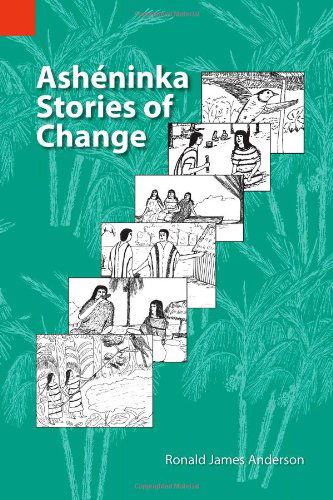
Asheninka Stories of Change (Publications in Sociolinguistics, Vol 4) Ronald J. Anderson
Pedido desde almacén remoto
 Los regalos de Navidad se podrán canjear hasta el 31 de enero

Nuestros clientes opinan:


Asheninka Stories of Change (Publications in Sociolinguistics, Vol 4)
Ronald J. Anderson
Modern economic and technological changes are accelerating the rate of social change in indigenous cultures around the world. The Ashéninka of the Amazon jungle region of east-central Peru confront change from two perspectives: the individual and the sociohistorical. All Ashéninka recall through their stories the four centuries of change since their earliest contacts with Spanish speakers.
For the Ashéninka, all learning is situated in a complex blend of factors: history, beliefs, motives, practices, and persons. Children learn some skills in a guided manner, similar to apprenticeship, in which an adult consciously aids the child. They learn other skills in a nonguided manner; the child organizes the learning activities, which take the form of dramatic play, solitary experimentation, and collaborative learning with peers.
As with learning traditional Ashéninka culture, the learning of a new culture is situated in its own complex blend of factors. Increasing contact with Spanish-speakers and increasing dependence on the market economy prompt the Ashéninka to give more value to learning Spanish, to organizing into villages, and to giving their children a school education.
Anderson's methodology in studying social change and its effects on education are applicable in many other parts of the world.
Table of Contents
List of Tables
List of Figures
List of Maps
Acknowledgments
Introduction
1.1 The problem
1.2 Perspectives on socialization
1.3 The need to go beyond dichotomies
1.4 Organization of the study
Voices of Historical and Cultural Change
2.1 The pre-colonial period: Ashéninka self-sufficiency
2.2 The colonial period: Franciscan missionaries introduce metal tools
2.3 Rebellion and isolation
2.4 Economic exploitation: The Peruvian Corporation and the rubber boom
2.5 The Seventh-Day Adventist missions: Villages, education, and an adaptive ideology
2.6 The contemporary period
2.7 Traditional Ashéninka life
2.8 The present situation
2.9 Conclusion
Voices of Oral History
3.1 The storytelling event
3.2 The jaguar stories and social control
3.3 Ashéninka values expressed in traditional stories
3.4 Conclusion
The Motivations for Learning
4.1 Anticipation of future physical need
4.2 Social acceptance
4.3 Identity formation
4.4 New technologies as a change factor in learning traditional skills
4.5 Social stigma as a change factor in learning traditional practices
4.6 Socioeconomic changes promote learning reading and math skills
4.7 Conclusion
Teaching and Learning Strategies
5.1 Nonguided learning
5.2 Guided learning
5.3 Nontraditional learning
5.4 Conclusion
Spirits and a Little Magic
6.1 Ashéninka belief in spirits
6.2 Witches and social alignment
6.3 Shamans and special insight
6.4 Magic in daily life
6.5 Conclusion
The Breadth of Socialization and Change
7.1 The multi-situated character of socialization
7.2 The comprehensive character of socialization
7.3 The persistent character of socialization
7.4 Conclusion
Appendix: Methodology
Participation in Asheninka daily life
Observation
Documents
Traditional stories
Interviews
Field research
Shortcomings in the data
Glossary
References
| Medios de comunicación | Libros Paperback Book (Libro con tapa blanda y lomo encolado) |
| Publicado | 2000 |
| ISBN13 | 9781556711022 |
| Editores | SIL International |
| Páginas | 245 |
| Dimensiones | 152 × 229 × 14 mm · 353 g |
| Lengua | Inglés |
Mas por Ronald J. Anderson

Ver todo de Ronald J. Anderson ( Ej. Hardcover Book y Paperback Book )